Vineguard: a tiny local co-op experiment

I spent parts of two days making a very small local co-op arcade game called Vineguard.
It started as an entry for the CGDC Speedgame Classic 2026, which gave the project a helpful frame: make something small, finishable, and playful without letting it turn into a giant engine project. You can also browse the other jam entries. I always enjoy seeing how many different directions people take from the same constraint set.
The idea came from Song of Solomon 2:15:
Catch the foxes for us, the little foxes that spoil the vineyards, for our vineyards are in blossom.
That turned into a one-screen game about guarding a vineyard together. Grapes grow from blossoms into unripe fruit and then ripe clusters. Players harvest the ripe grapes, carry them to a central winepress, and take turns jumping on two pump platforms to press juice. Meanwhile, foxes wander in and try to steal the fruit. There is no attack button; you just run near the foxes to scare them away.

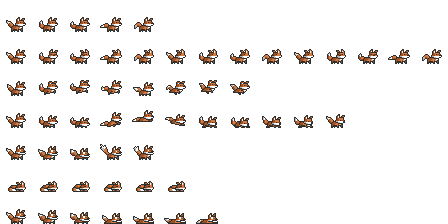
It is a deliberately small project. The whole thing is plain HTML, JavaScript, and Canvas, with no build step. It is meant to run easily on GitHub Pages and be understandable enough that the code is not locked behind a big engine or framework.
Most of it was vibe-coded, honestly. I had a design direction and kept steering, testing, and tightening the loop, but a lot of the implementation came through conversational coding. That made it a useful experiment in a couple of ways: not just "can AI help make a game?" but "can it help keep a tiny game moving fast enough that the shape of the game stays playful?"
The part I like most is the local multiplayer angle. A lot of games are technically multiplayer but still end up feeling socially distant. I wanted to try something pointed in the other direction: one screen, one room, shared pressure, visible roles, and enough chaos that players naturally start talking to each other.
The winepress is the clearest version of that idea. One player can operate it by jumping back and forth, but it is clumsy. Two players alternating jumps do much better. Someone else can guard the center. Someone else can sprint out to the far vines. None of those are formal classes or assigned roles, but they appear naturally if the game is readable enough.
The project is tiny, and I do not want to oversell it. It is a jam-scale toy, made quickly, with simple pixel art and a lot of rough edges. But it was a fun way to explore a question I keep coming back to: what kinds of small games help people enjoy being physically together?
That feels worth trying, even in miniature.
0 Comments
No comments yet. Be the first!
You'll need a GitHub account. Your comment will appear here on the next site rebuild.